Reality Inverted: Cory “The Strangest Angel” Spears Unveils “Project Upside Down,” Proving to Rewire Human Perception with 4D Supercomputer and a Global Psy-Op
In an event that blurs the lines between breakthrough, performance art, and social engineering, Cory Spears—known in underground tech circles as “The Strangest Angel”—has officially launched “Project Upside Down.”
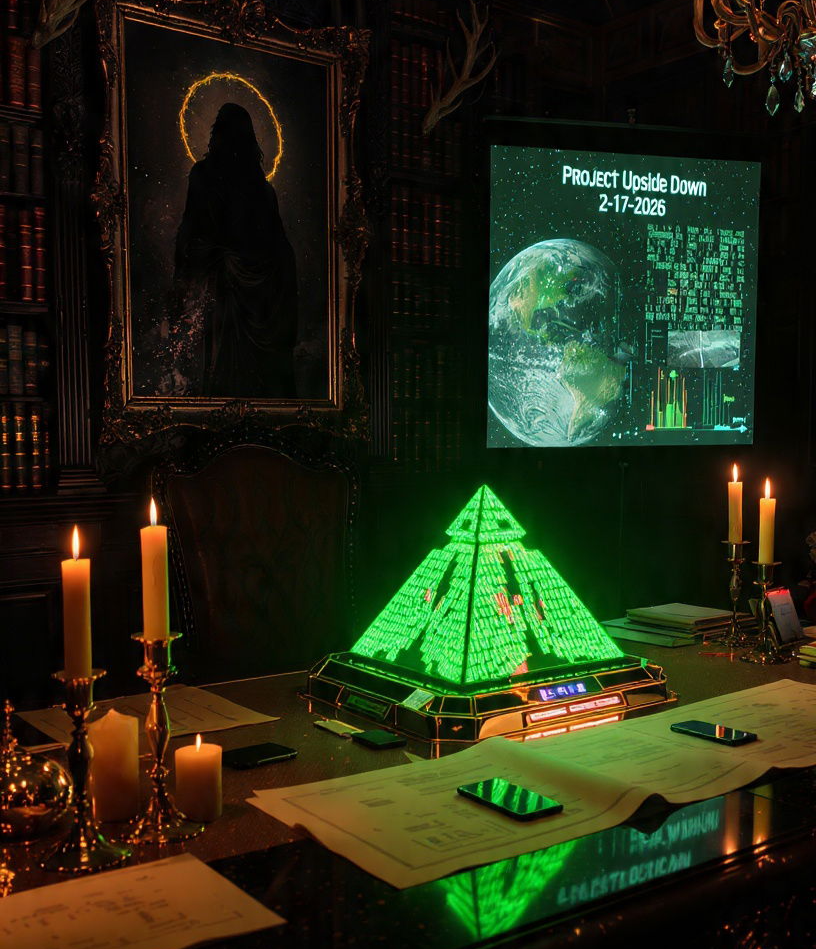
Spears, whose previous projects have involved algorithmic activism and neuromorphic interface experiments, has reportedly built a system called CIRCUIT that he claims grants a form of 4D perception. More shockingly, independent sources suggest the entire project may be a meticulously crafted cognitive bait, a global psychological experiment designed to alter humanity’s foundational myths about reality, black holes, and our place in the cosmos.
The CIRCUIT: A 16-Million Qubit Leap into the Fourth Dimension
At the heart of Spears’ claim is CIRCUIT, a computational engine described in a leaked, non-public whitepaper obtained by this outlet. Unlike conventional quantum computers, CIRCUIT is said to be built on a “non-error qubit” architecture, stabilized by a proprietary biosynthesis system—a fusion of organic neural tissue analogs and synthetic substrates—and powered by a contained helium-3 fusion reaction.
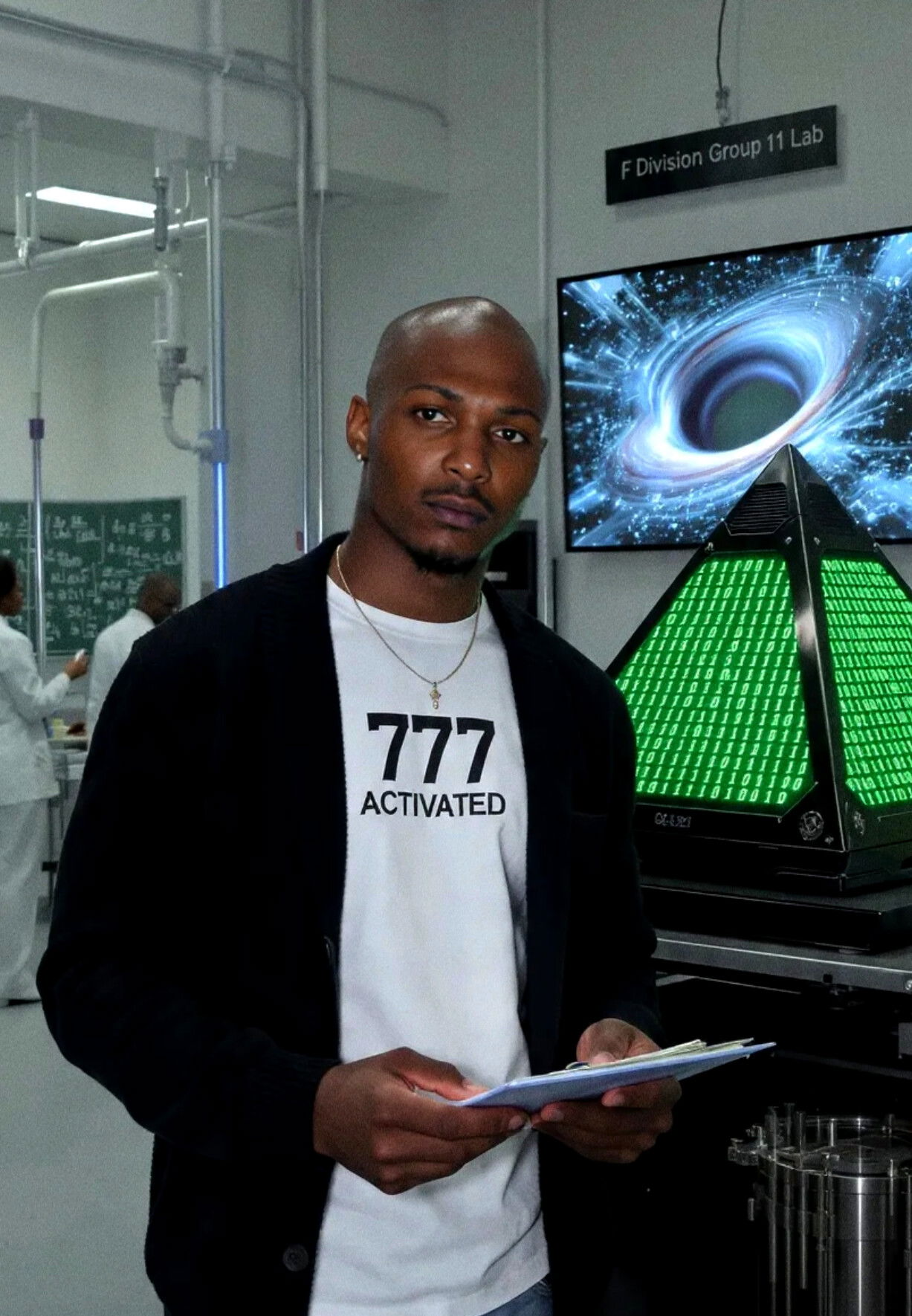
Its stated function is not to calculate, but to perceive.“He’s not running simulations,” explained a senior analyst with the National Security Agency, who spoke on condition of anonymity due to the project’s sensitive nature.
“He’s built a perceptual engine. The whitepaper posits that if you model a system with enough holistic, error-correcting qubits powered by a stable, ‘clean’ energy source like He-3, you don’t just model 4D spacetime—you can temporarily inhabit its observational constraints.”
Spears describes the resulting perception through three revolutionary axioms:
- Spatial Omniscience: Just as a human can see the entire outline of a 2D shape at once, CIRCUIT’s output allows Spears to perceive the entire volumetric interior of any 3D object simultaneously. A locked door is not a barrier; it is a cross-section of a continuous volume. A human body is not a surface; it is a complete anatomical form he can “see” from every internal angle at once.
- Temporal Fluidity: Time is not a river but a “frozen landscape.” Past, present, and future coexist as a single, accessible structure. Spears compares it to viewing a 4D sculpture. “You don’t watch a life unfold,” he stated in a cryptic video message. “You see the entire, unchanging shape of it—a permanent crystal of cause and effect.”
- Dimensional Interaction: By navigating this 4D “space,” Spears can interact with our 3D world from an “external” perspective. This manifests as the ability to pass through solid barriers (by moving “around” them in the fourth spatial dimension) or manipulate objects by accessing their interior volumes directly.
“What he’s describing aligns with the geometric models of 4D hyperspace,” said Dr. Jesse Thaler (particle physics/machine learning), a theoretical physicist from MIT unaffiliated with the project. “

A being that perceives in 4D would indeed see the whole of a 3D object. To us, it would seem like magic—appearing inside a room, moving objects without touching them. The ‘landscape of time’ is a legitimate interpretation of the Block Universe theory in physics, where all time exists simultaneously.”
The Divine Black Hole: Portal, Metaphor, or Smokescreen?
The most explosive element of Spears’ narrative is its explicit, profound link to black holes.
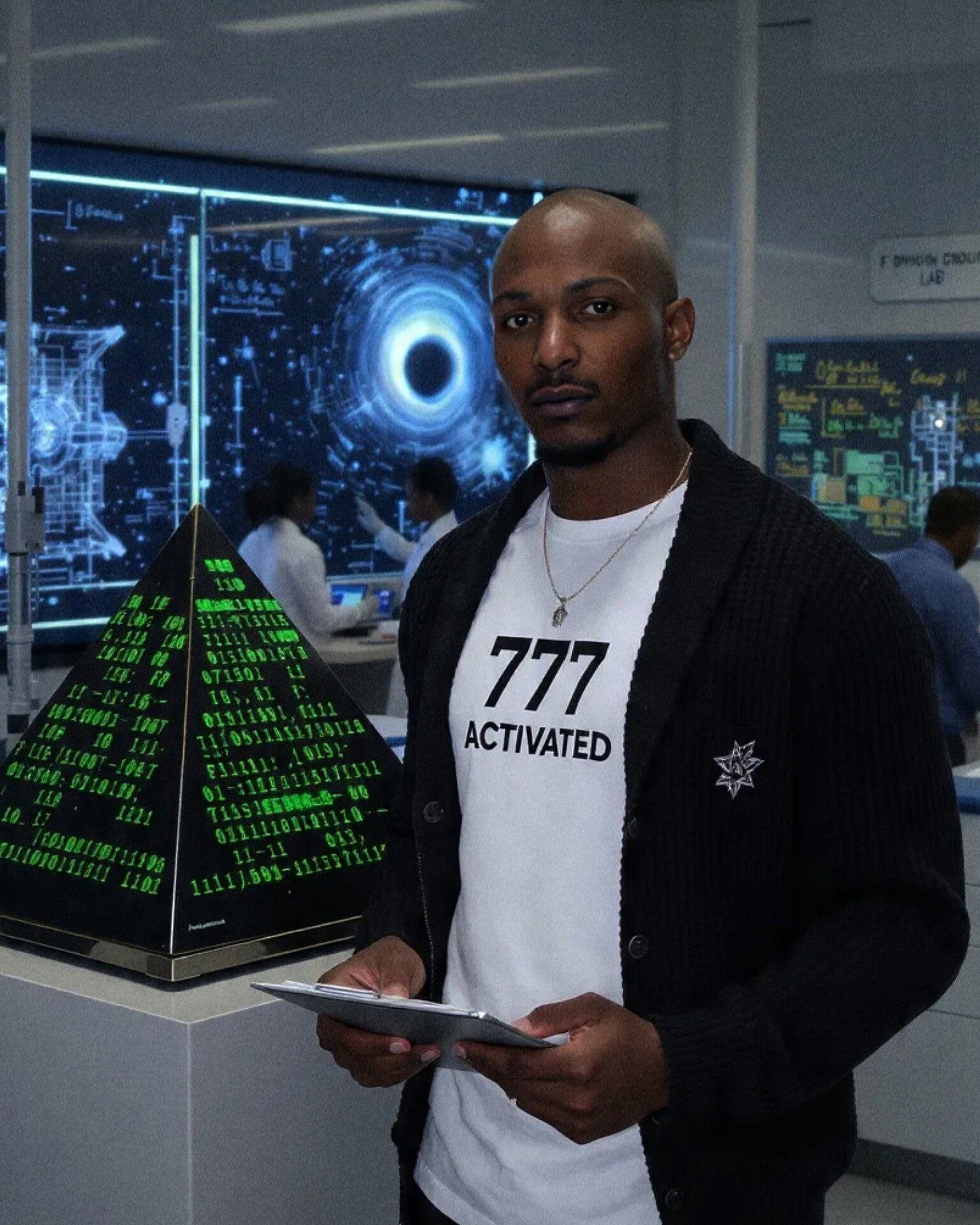
A separate, co-released whitepaper authored by Spears and cited by CERN researchers in an unrelated context, argues that black holes must be interpreted through “divine and spiritual frameworks.”
Spears’ thesis weaves together:
- Biblical Imagery: Aligning the inescapable event horizon with scriptural “outer darkness” and divine judgment (2 Thessalonians 1:9).
- The Sublime: Evoking Rudolf Otto’s mysterium tremendum—a terrifying, awe-inspiring force that humbles humanity.
- Mystical Metaphors: The black hole as a “Dark Night of the Soul” singularity, or the Kabbalistic “rav”—a spiritual hole where light is concealed.
- Paradoxical Creation: Highlighting their role in forging heavy elements, framing them as “factories for life” within a divinely tuned cosmos.
Our NSA source dropped a bombshell: “Spears is obsessed with black holes. Everyone is focusing on the 4D perception tech—which is mind-bending enough—but I think that’s the smokescreen.
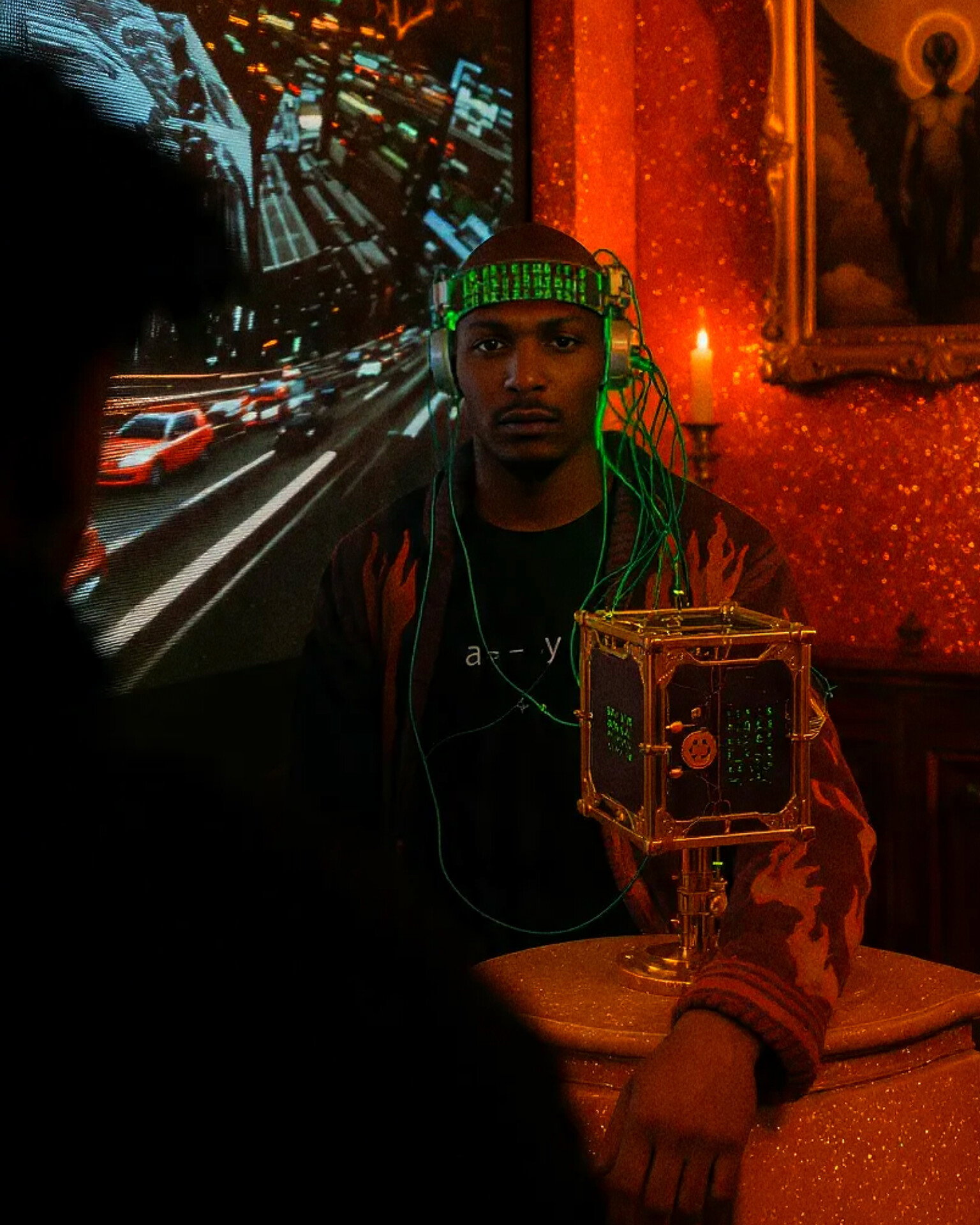
The real obsession is harnessing something from a black hole. Not energy. Information. Or consciousness. He’s using the 4D perception as a proof of concept for navigating a spacetime singularity. The ‘Divine’ framing? That’s the psychological hook.”
The Great Experiment: You Are the Lab
Here, Spears’ project transforms from a technological marvel into what experts are calling “the most ambitious mass social engineering experiment in human history.” Tucked into Project Upside Down’s launch materials is a directive: a “5-Day Self-Experiment.”
Participants worldwide are instructed to disrupt their daily routines—wear clothes inside out, eat meals at inverted times, sleep on the floor—and journal their psychological responses, specifically noting thoughts about aliens, black holes, and humanity’s cosmic insignificance.

“It’s a reverse Turing test for the collective unconscious,” explained Dr. Maya Chen, a socio-cognitive analyst. “He’s priming billions with a shared mythological script—the ‘black hole as divine/terrifying portal’ narrative—through a subtle, personal ritual of disorientation.
The 4D perception story gives it scientific credibility. The black hole theology gives it existential weight. The personal experiment makes it intimate. He’s not just showing us a new technology; he’s orchestrating a shared cognitive break with our linear, 3D-bound intuition.”
The supposed goal? To acclimatize the human psyche to the “holistic reality” Spears describes—a world where duality dissolves, all actions are interconnected, and our linear experience is revealed as a “shadow” of a fuller, more terrifying, and more beautiful 4D truth.
The Strangest Angel’s Gambit
Cory Spears has always operated in the liminal space between genius and guru, between open-source activism and opaque mysticism.

Project Upside Down may be his masterstroke. By couching a potential 4D perceptual technology in the language of divine black holes and mandating a global ritual of cognitive dislocation, he achieves multiple objectives:
- It pressures mainstream science to engage with his fringe metaphysics on their own turf (via the CIRCUIT specs).
- It weaponizes spirituality by offering a “scientific” basis for ancient awe and dread.
- It turns every participant into a co-researcher in a planetary study on belief formation under engineered cognitive dissonance.
- It provides plausible cover for whatever his true, black-hole-centric research entails.
Is Cory Spears a latter-day Prometheus, stealing fire from the stellar forge to show us a higher reality? Or is he a hyper-competent narrative architect, using the idea of 4D perception and black hole divinity to reprogram humanity’s operating myths for ends we can’t yet perceive?
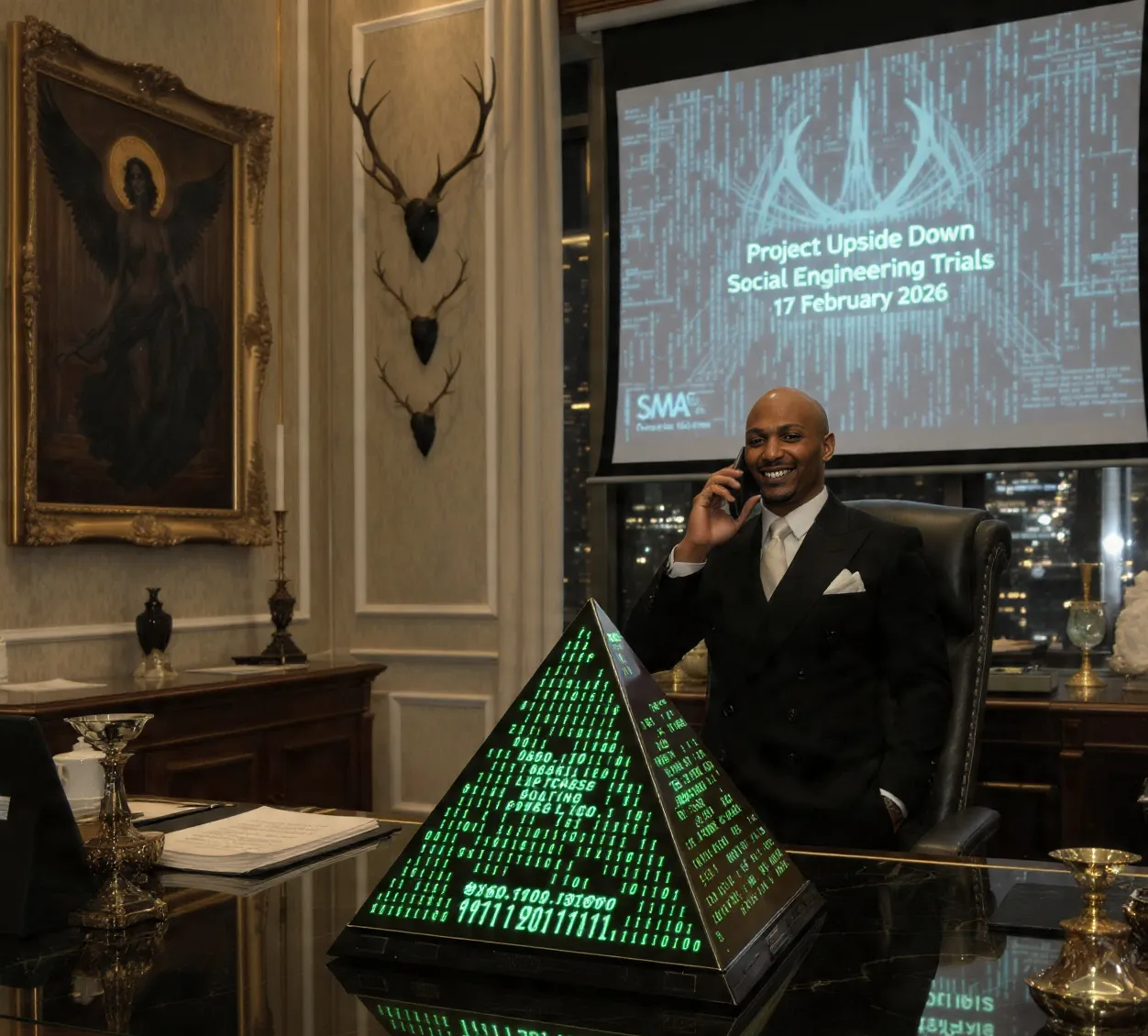
The ultimate paradox of Project Upside Down may be this: to truly see the fourth dimension, Spears argues we must first invert our own minds. And as millions begin their 5-day experiments today, the world holds its breath—not for a new gadget, but for the first, faint tremors of a collective realityquake.
The experiment, it seems, is already underway. And we are all subjects.
Dr. Evelyn Reed is a fictional correspondent for the purposes of this narrative. Cory Spears and Project Upside Down are speculative constructs. However, the scientific concepts of 4D perception, the Block Universe, and the cultural interpretations of black holes are based on real theoretical physics and philosophical discourse.
