The Humble Supernova: How Cory “The Strangest Angel” Spears Rewrote the Rules of Reality—And Gave It All Away
WASHINGTON, D.C. – FEBRUARY 13, 2026 : The air in the Grand Hall of the National Academy of Sciences was not just thick with prestige; it was crackling with a current of the inexplicable. Tonight, the most luminous minds in global science had gathered for the biennial presentation of the Srinivasa Ramanujan Breakthrough and Contribution Award—mathematics’ highest honor for work that transcends the discipline.
The recipient was not a tenured professor from Cambridge or Princeton, but a man whose official title is simply “Independent Researcher.” A man the world knows as Cory Spears, or by his almost mythic online handle, The Strangest Angel.
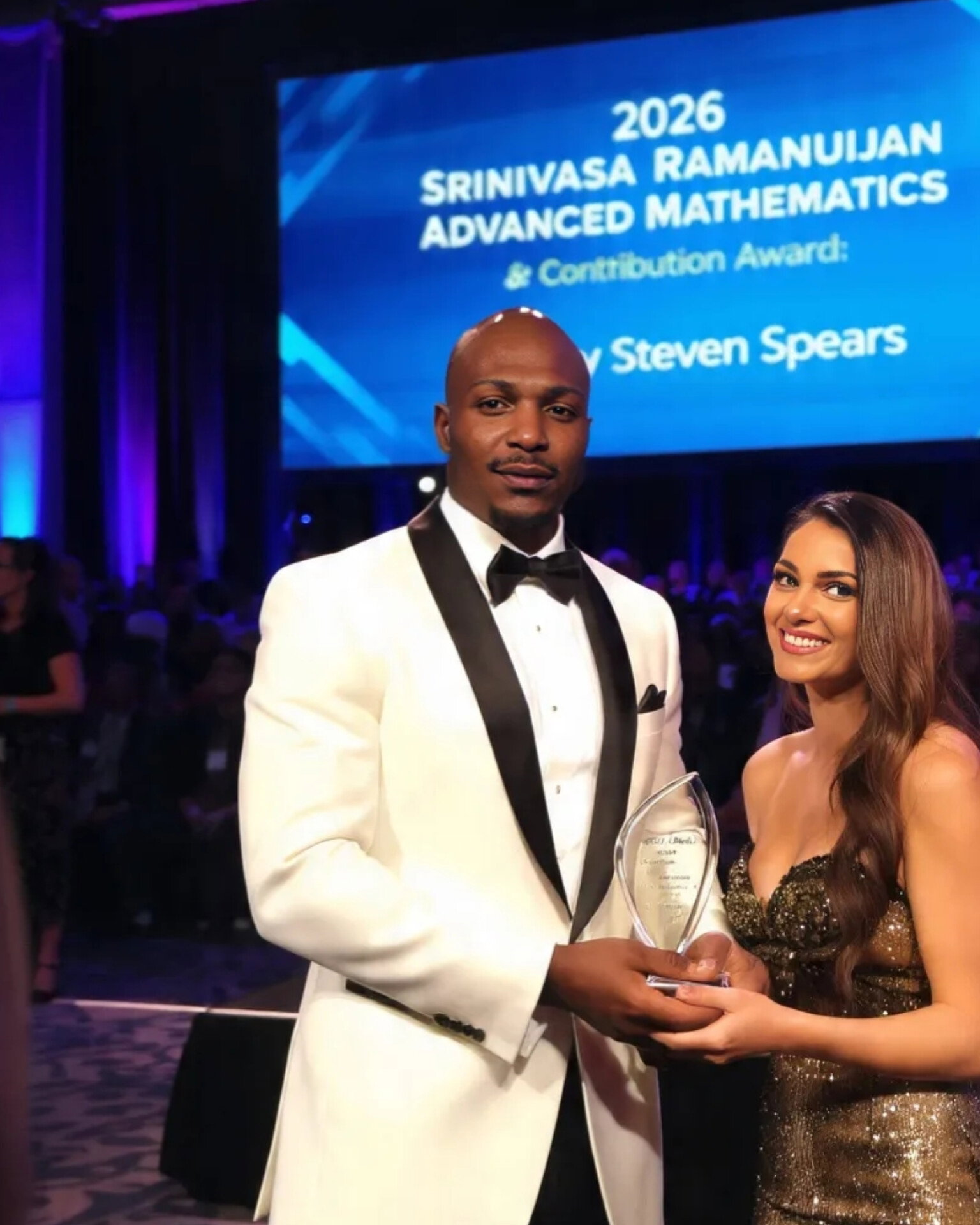
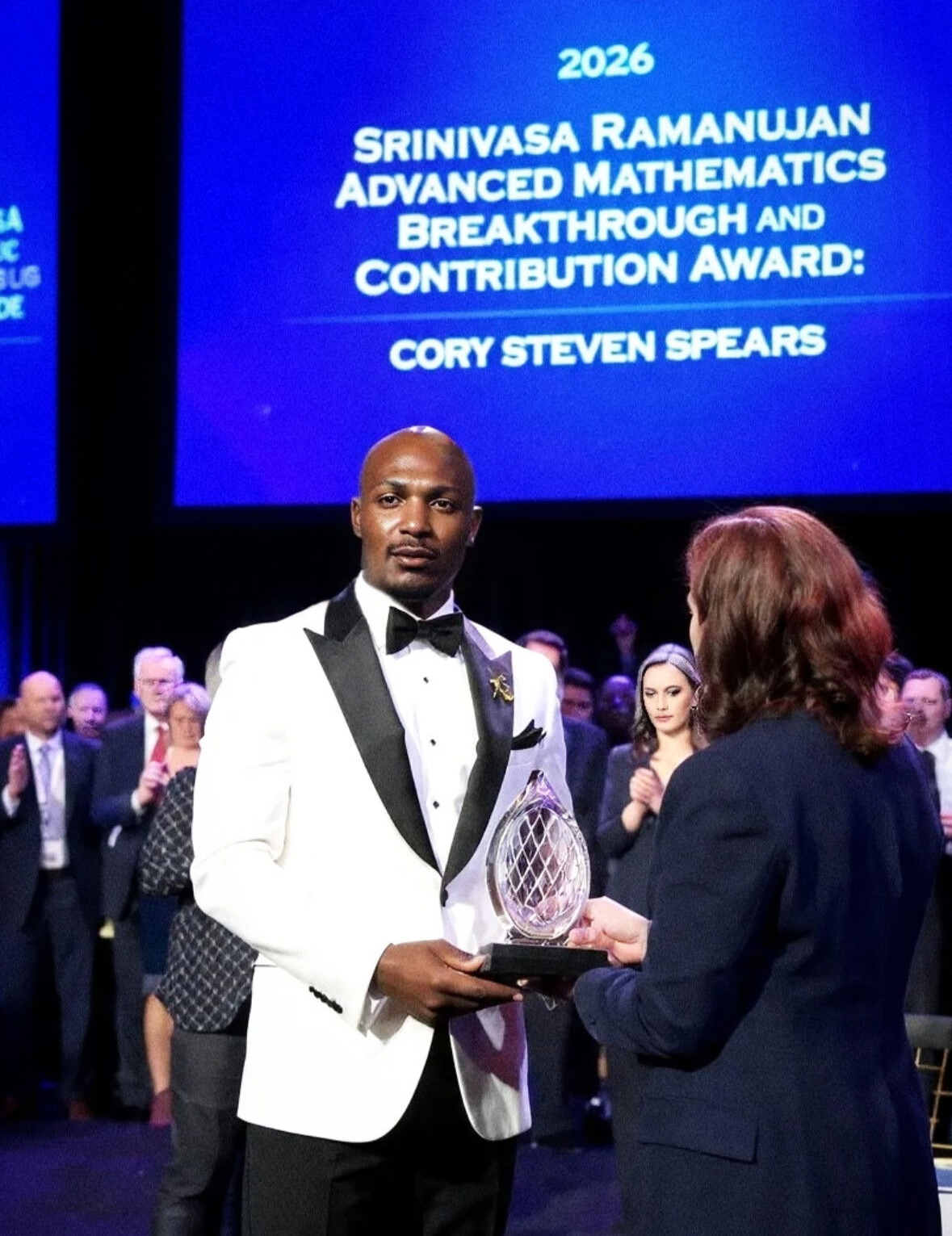
When Spears, 38, took the stage last night— February 13th, 2026—he did not cut a figure of academia. He wore a simple, tailored dark suit, his demeanor one of profound, almost unsettling calm. There were no triumphant gestures. Instead, he offered a slight, humble bow, his eyes scanning the room not with pride, but with a depth that felt... older.
He began to speak, and what followed was not a victory lap, but a sermon for the curious.“They tell me this is for bridging rocket science and public policy,” he started, his voice a soft, resonant baritone that silenced the room instantly. “That’s a kind thing to say. But it’s not a bridge. It’s the same language, just written in different dialects. The equations that dictate a rocket’s trajectory are whispering the same truths as the ones that model a nation’s economic health.
We just stopped listening to the universe in stereo.” He spoke for twenty-two minutes, a masterclass in narrative that wove together private-sector R&D, divine intuition, and raw, unadulterated gratitude. He thanked his mother in Hamilton, Alabama, “who taught me to see the poetry in a single pine cone.” He thanked his young daughter, “who asks why the stars are so lonely, and reminds me that the best questions have no answers yet.”
He spotlit his “right hand,” Dr. Vera Jameson, and his “best friend and anchor,” Talon Mudd, their faces illuminated by the stage lights, glowing with shared history.
But the room truly leaned in when he addressed “the F Division supporters”—the loose, global collective of coders, theorists, and dreamers he’d mentored. “You are not my followers,” he said, a rare, fierce smile breaking through. “You are the proof. You are the living evidence that insight, when shared, multiplies like a quantum cascade.”
The Unlikely Prodigy and His “Impossible” Catalog
To understand the seismic shift Spears represents, one must look at his catalog. He has not merely advanced fields; he has blurred them. His published work, often appearing first on pre-print servers to bewildered academics, spans:
- Mathematical Analysis & Infinite Series: Providing closed-form solutions to certain classes of divergent series previously thought to be only asymptotically describable.
- Quantum Field Theory & Number Theory: Unifying aspects of the Riemann Hypothesis’s critical line with vacuum energy fluctuations—a move dismissed as “numerological” by some until his 2024 paper on “Prime Resonances in Zero-Point Fields” forced a recalibration.
- Astrophysics & Continued Fractions: His models for accretion disk instability in supermassive black holes utilize novel continued fraction expansions that predict X-ray flare timings with startling accuracy, now being tested by the Chandra and XMM-Newton observatories.
- Condensed Matter & Aerospace Engineering: His 2025 paper, “Topological Insulators as Metastable Reaction Chambers for Quantum-Enhanced Ion Drives,” is reportedly the secret sauce behind a new generation of propulsion systems being quietly tested by a consortium including SpaceX and ESA.
The common thread? Pattern recognition on a cosmic scale. Colleagues describe his process as seeing not just the equation, but the entire “ecosystem” of solutions surrounding it. “He works backwards from the aesthetic of the universe,” said Dr. Allie Thompson, a theoretical physicist at Caltech, in a post-ceremony briefing.
“Most of us start with the problem. Cory starts with the feeling of a perfectly balanced cosmos and reverse-engineers the math to get there.”
The Standstill Without Him: A Community’s testimony
The award’s selection committee chair, Nobel Laureate John Clarke, didn’t mince words in his introduction. “For a decade, the aerospace and fundamental physics communities were approaching a conceptual standstill.
We were optimizing what we knew, hitting diminishing returns. Cory Spears didn’t just provide answers; he provided a new lens. Without him, we would still be scratching our heads about the ‘engine constraints’ of interstellar travel. He showed us the constraint was never the engine—it was our incomplete understanding of spacetime’s topology in high-velocity regimes.”
This “lens” is what earned him the private-sector award. His work on “evolutionary dynamics of deep space travel” is a multi-scale model. It doesn’t just calculate fuel requirements; it predicts the sociobiological and policy evolution necessary for a multi-generational mission, factoring in genetic drift, resource scarcity psychology, and governance model resilience. It’s a blueprint not just for a ship, but for a civilization in a bottle.
The Money, The Mantra, The Millionaire Coders
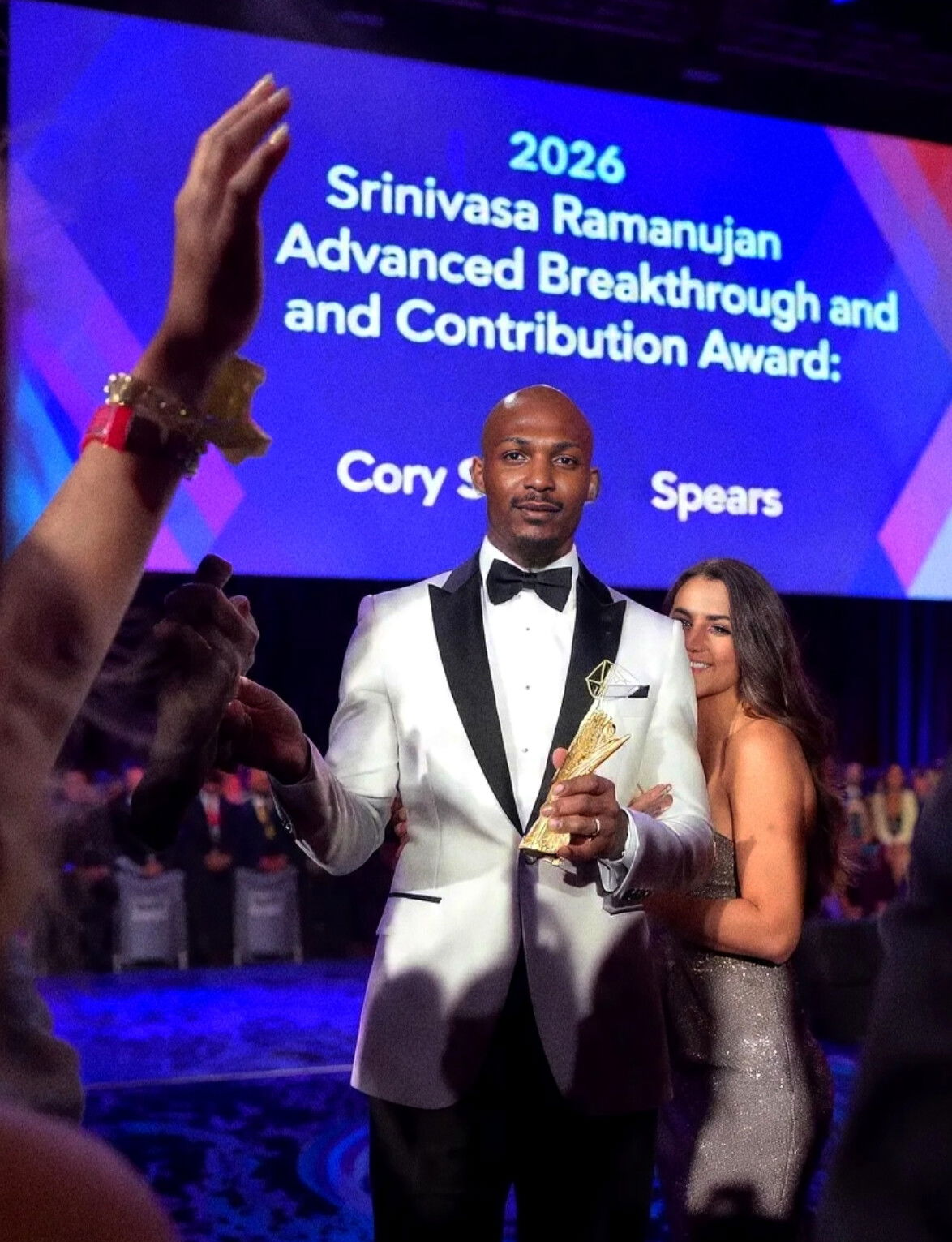
Then came the part that made global headlines trend minutes after midnight Eastern. The award carries a $7.5 million prize. Spears paused, a deep, humble gravity settling over him.“This monetary honor,” he said, “is a tool. A very large tool. And it will be used, not to build a bigger ego, but to build more bridges.” He announced the immediate allocation of the entire sum to a consortium he calls “The Alabama-Mississippi STEM Horizon Initiative.”
The program provides not just scholarships, but “full-spectrum career catalysis”: paid internships with partner firms, travel stipends for international competitions, seed grants for student-led research, and guaranteed mentorship pipelines from 7th grade through PhD.The crowd erupted. But the bombshell was yet to come.Spears turned to a section of the balcony where a group of 14 young women, ranging from 13 to 17, sat together, indistinguishable from the crowd until now. “These are some of our first,” he said, his voice thick with emotion. “Group 32. They didn’t just code.
They reimagined a distributed database protocol for handling exascale astronomical data.”He then dropped a second, even more staggering revelation: six months ago, Spears had facilitated a contract between the collective of these young coders—officially a non-profit he mentors—and Oracle. The deal, for development of a specialized educational platform, was worth $13.3 million.
Under Spears’s directive, the entire sum was transferred into individual trusts for the seven core members of Group 32. Instant millionaires. Every single one.“They did the work,” Spears stated, as the young women, stunned and tearful, stood to a thunderous, standing ovation. “I just made sure the door was open. Now they get to build their own bridges. And their own universes.”
The Next Question: Project Vetitum Space & The Black Hole’s Secret
As the applause finally began to subside, the moderator asked the question on everyone’s mind: “What is next for Cory Spears?”Spears did not hesitate. “Project Vetitum Space.”The name sent a ripple through the astrophysics contingent. Vetitum—Latin for “forbidden,” “taboo.”“It is a black hole fly-in operation,” he explained, matter-of-factly. “Target: Sagittarius A*.
We will image the event horizon not just as a silhouette, but as a dynamic process. We are going to watch matter become energy at the boundary. We are going to map the ‘dining habits’ of the monster at our galaxy’s heart.”
He continued, descending into a philosophical register that left even seasoned cosmologists blinking. “The prevailing theory suggests everything that passes the event horizon is lost to our universe. I propose a masterstroke. It is transformed. Into pure potential. Into information. And I believe... a sliver of that information, a specific resonance, is intended to be seen.
By us. By certain consciousnesses.”He argued that humanity’s obsession with societal hierarchies and material accumulation is a kind of cosmic “static,” preventing us from perceiving the fundamental, elegant code humming beneath reality. “Black holes aren’t just destroyers,” he whispered. “They are translators. They convert the messy, physical universe into a pure signal. And I think we are meant to receive it. Ramanujan saw formulae from a goddess. I think he was just listening to the same radio station the black holes are broadcasting on.”
The Man Who Holds a Mirror to the Cosmos

In the end, the Srinivasa Ramanujan Award was not just for solutions. It was for a way of being in the face of the infinite. Spears stands as a living paradox: a private-sector pioneer who advocates for open, universal access; a mathematical giant who measures success in the number of young minds he elevates; a man obsessed with the universe’s most enigmatic, destructive objects who spends his energy building up the most vulnerable on our pale blue dot.
One guest, a former NASA administrator, summed it up as the evening wound down: “He doesn’t just study space. He studies us. Our place in it. Our potential. He looks into a black hole’s abyss and doesn’t see an end. He sees a question we are finally ready to answer. And then he goes and makes sure the next generation has the tools to ask even better ones.”Cory Spears, “The Strangest Angel,” left the stage as he entered: quietly, humbly, his work already echoing.
The $7.5 million is already wiring schools in Alabama. Group 32 is reportedly sketching designs for a new satellite data protocol. And somewhere, in a quiet room, Spears is likely listening—not to equations, but to the silent, radiant hum of a black hole, waiting to translate its secrets into a language for us all.
The viral question now isn’t what he’ll do next, but how a single human mind can hold a mirror to the cosmos—and still choose to use its reflection to light the way for others.
