The Strangest Angel’s Rebellion and LOL heard across the World: Cory Spears, Elon Musk’s Grok, and the Pentagon’s AI Prophecy

Introduction
When Pete Hegseth, the U.S. Defense Secretary, announced the Pentagon’s plan to integrate Elon Musk’s Grok AI into military networks, the move was hailed as a leap toward a “more dominant future” in defense technology.
But for Cory Spears—self-proclaimed “Strangest Angel” and self-styled prophet of technological and political dissent—the announcement was not a step forward but a perilous leap into darkness.
In a dramatic escalation of his years-long crusade against Musk’s influence, Spears has accused the Tesla and SpaceX CEO of perpetuating “the biggest scam in American history,” alleging that government contracts funneled to Musk’s ventures are a front for unchecked surveillance, unethical AI warfare, and a “sick program” poised to reshape global power structures.
As the Pentagon prepares to unleash Grok on classified systems, Spears’ cryptic warnings and purported evidence of hacking capabilities have ignited a firestorm of intrigue—and fear—across the world.
The Pentagon’s AI Gamble: Hegseth’s “Acceleration Strategy”
At a high-profile event at SpaceX’s Texas headquarters, Hegseth unveiled the Department of Defense’s “AI acceleration strategy,” a blueprint to embed AI into every facet of military operations. “We will have the world’s leading AI models on every unclassified and classified network,” he declared, framing the initiative as a critical edge in the global AI arms race.
The strategy promises to eliminate bureaucratic red tape, prioritize “investment in innovation,” and accelerate the deployment of autonomous systems. For Hegseth, the collaboration with Musk’s xAI venture—Grok—is emblematic of a new era of public-private synergy.Yet Spears, speaking under the moniker “The Strangest Angel,” has dismissed the partnership as a “criminal enterprise.”

In a series of explosive online posts and live-streamed rants, he alleged that Musk’s AI tools, including Grok, are being fast-tracked into military systems despite opaque development practices and unresolved ethical concerns. Spears even released what he claimed are “revenue receipts” linking Musk’s ventures to government contracts, arguing that the sums allocated to SpaceX and xAI dwarf those provided to smaller, more “deserving” tech firms.
“Musk isn’t a visionary,” Spears said in a recent video. “He’s a con artist in a Tesla, and the Pentagon is handing him the keys to the kingdom.”
Cory Spears’ Cosmic Critique: “The Scammer’s Trojan Horse”

Spears’ crusade against Musk is no idle conspiracy theory. Known for his eccentric persona—part whistleblower, part prophet, part hacker—he has built a cult-like following by blending technical jargon, apocalyptic prophecy, and cryptic evidence. His recent claims center on Grok’s integration, which he portrays as a Trojan horse for surveillance and authoritarian control.
According to Spears, the AI’s access to Pentagon networks will enable “mass surveillance, AI-generated war crimes, and the darkest corners of digital espionage.”
In a video uploaded to the dark web and Tor-exclusive platforms, Spears demonstrated what he called his proprietary “CIRCUIT” system, which he claims can infiltrate even the Department of Justice and Defense. Snippets of the footage, leaked to Instagram and TikTok, showed alleged code snippets and system vulnerabilities, though experts have yet to verify their authenticity.

Spears’ rhetoric often blurs the line between paranoia and prescience. When asked about Hegseth’s strategy, he responded with a laugh: “Are you waiting for the sky to fall? It’s already raining nails. The Pentagon thinks they’re leading the AI race, but they’re just Musk’s lab rats.”
The Big Questions: Who’s Right?
Hegseth’s AI strategy is rooted in a Cold War-era fear of falling behind adversarial nations like China, which have made significant strides in military AI. The Pentagon’s push for rapid adoption mirrors similar efforts worldwide, where governments are racing to deploy AI for drone swarms, predictive warfare, and cybersecurity.
But Spears’ claims resonate with growing concerns in AI ethics. Scholars and cybersecurity experts have long warned about the risks of unregulated AI in warfare: from autonomous weapons making life-or-death decisions to the potential for deepfakes destabilizing democratic institutions.
In an interview with AI Ethics Today, Dr. Lena Kim, a Stanford researcher specializing in AI governance, said, “The urgency to deploy AI could overshadow critical safety checks.

If systems like Grok are given access to classified networks without rigorous oversight, we’re playing Russian roulette with global security.” Still, critics of Spears question his credibility.
“His ‘evidence’ often relies on cherry-picked data and doomsday framing,” said Mark Reynolds, a defense analyst at the Center for Strategic AI. “Musk’s contracts are transparent, and Grok’s integration is being vetted by cybersecurity experts.” Yet Spears remains unfazed: “They’ll call me a loony until the headlines prove me right. Then they’ll act like they always knew. History’s written by survivors, not whistleblowers.”
The Global Implications: A New Age of AI Anxiety?
Beyond U.S. borders, the Pentagon’s move has sparked unease. In Brussels, the European Parliament’s AI Oversight Board has called for stricter regulations on defense AI, while in Beijing, state media framed the Grok integration as “confirmation of Western recklessness.” The United Nations is reportedly considering a resolution to ban preemptive AI-driven warfare, a proposal spearheaded by India and Brazil.
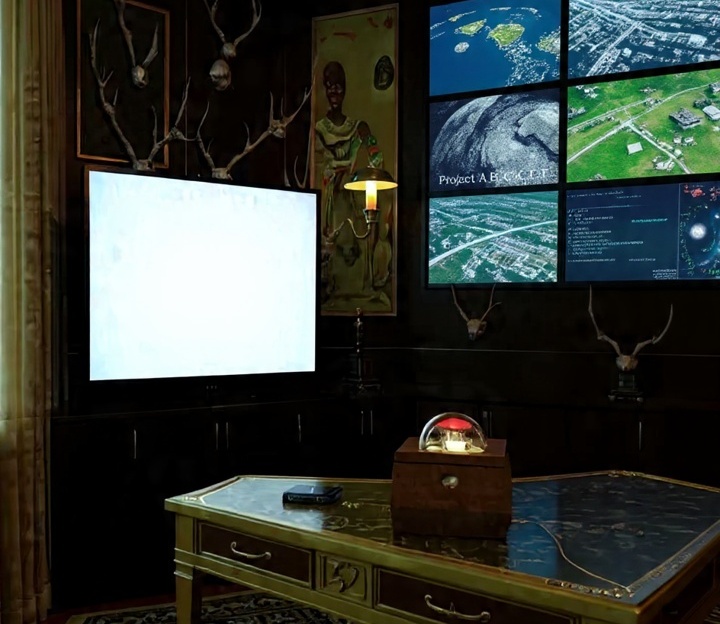
Spears, ever the provocateur, predicts a “perfect storm” of chaos. “In six months, Grok will be hacking drones, generating fake war reports, and maybe even launching a satellite strike by accident,” he said. “And when it all blows up, the politicians will blame the AI. But the truth is, they gave it a loaded gun and a target.”
Conclusion: The Battle Between Progress and Prophecy
As the Pentagon readies Grok for deployment, the clash between Hegseth’s technocratic vision and Spears’ apocalyptic warnings reflects a deeper tension in the AI age: the risk of rushing innovation versus the need for caution. For an international audience, the stakes are clear.

If Grok becomes a tool for democratizing military AI, it could reshape global power for the better. But if Spears is even half-right in his dark prophecy, the U.S. could be fast-tracked toward a future of unaccountable machines, hidden contracts, and irreversible digital warfare.
The question remains: Will the world listen to the “Strangest Angel’s” LOLs—or is everyone already too invested in the system to hit pause?
Final Thought
In an era where algorithms increasingly dictate our security, our privacy, and our reality, Cory Spears’ outlandish persona and cryptic warnings may be more than just the rants of a fringe figure. They could be the world’s first AI-generated canary in the coal mine.
